Master Common Core Skills with Free DBQ iBook

» 05 March 2013 » In Ed Tech, History / DBQ's, Literacy, Publishing, Strategies » 2 Comments

Progress and poverty

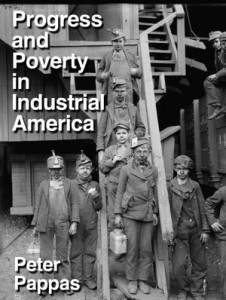
My latest multi-touch iBook, Progress and Poverty in Industrial America, is available for your iPad - free / iTunes. It's a great resource for use in the classroom, and serves as a model for teacher or student curation of historic content into interactive digital DBQ's. (More of my posts on publishing with iBooks Author.)

This 18-page document-based question guides students through the historian's process with an investigation of the essential question, "How do we evaluate the social costs 
and benefits of technological innovations?" To make the question relevant to students, it begins with a brief examination of the impact of 21st c technologies / global economy on progress and poverty in contemporary America.

superba

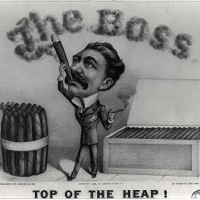
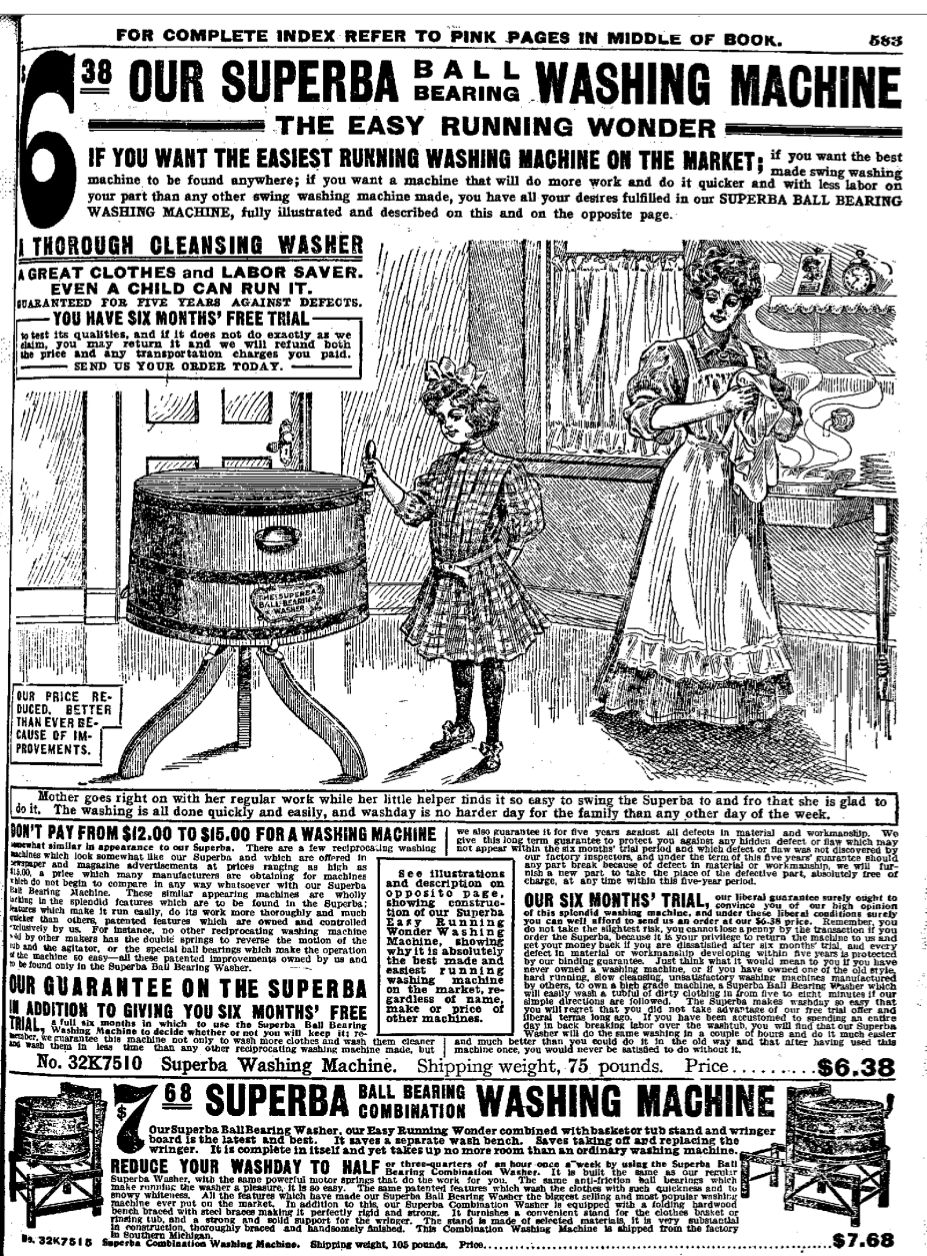
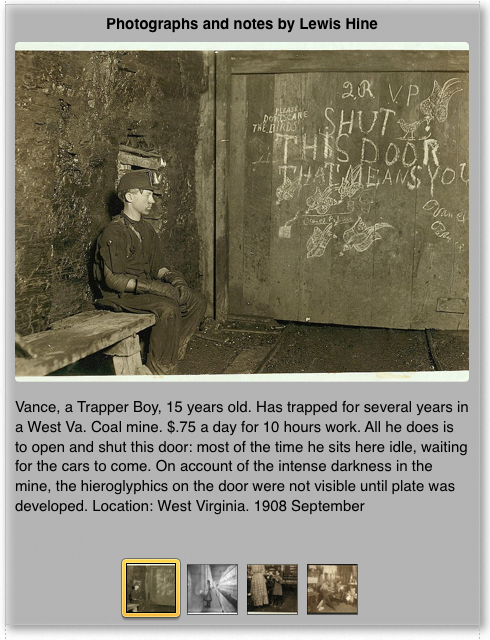
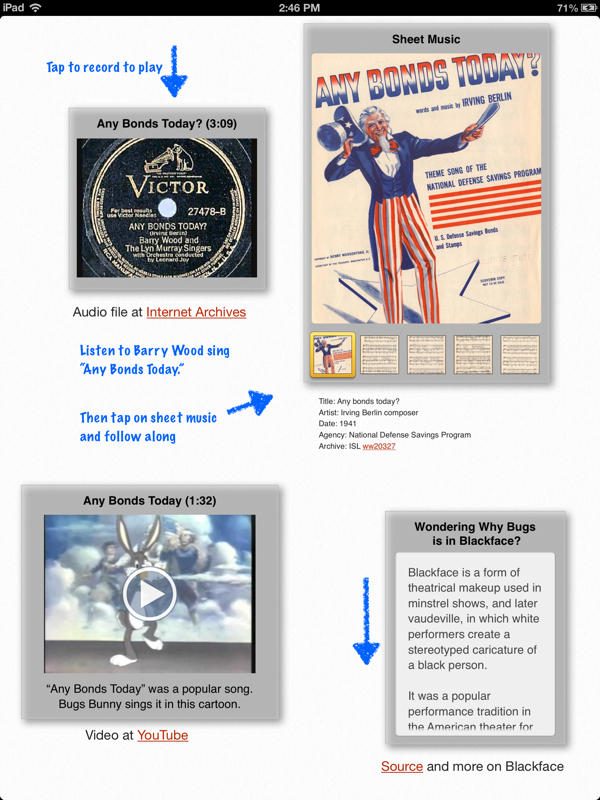
Next the iBook turns to historic content set in late 19th century America. "Stop and think" prompts encourage a deep reading of many notables of the "Gilded Age" - including Russell Conwell, Henry George, Andrew Carnegie and Stephen Crane. Visual source material includes posters, 1908 Sears Catalogue, a gallery of photographs by Lewis Hine and video of one of Edison's early Vitascope films. Guiding questions help students think more deeply about each document:

What does the document tell you about America at the turn of the 20th century?
How do these historic themes of “progress and poverty” relate to issues in America today?

How do we evaluate the social costs 
and benefits of technological innovations?

Hine gallery

Students are guided through the historian's process with a focus on the contrast between historic perspectives.

For example, students can compare how industrialization impacted children in different ways in the stark contrast of a young girl demonstrating the use of Sears Superba Washing Machine ("mother's little helper finds it easy to swing the Superba to and fro...
") and a gallery of Lewis Hine's child labor photographs.

Can the cannery worker really take advantage of the new libraries that Carnegie has so generously donated to the city?

timecardfull

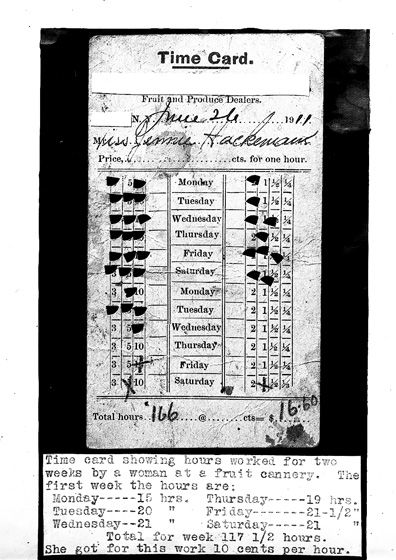
Another document is from records of the NYS Factory Investigating Commission- Time card dated June 26, 1911. "She was employed in a fruit cannery. She worked 166 hours for the two weeks, earning $16.60." Student can contrast that with an excerpt from Carnegie's Gospel of Wealth  - "the millionaire will be but a trustee for the poor; entrusted [with wealth] ... administering it for the community far better than it could have done for itself."

Critical thinking questions based on Common Core skills are embedded throughout the text and help students "think like a historian."

  • Who created the document?
  • What was the creator's goal?
  • How does the document reflect its historic time period?
  • How do multiple documents support or contradict one 
another?
  • What historic “voices” are missing from this collection - women, immigrants, minorities, workers?

Finally student are invited to share what they've learned in writing and a variety of other products:

  • Compose an essay or blog post
  • Draw an illustration, create an infogram, post a video
  • Role-play a debate - Hine vs Carnegie? or 
Conwell vs a supporter of the Occupy Movement?
  • Start a discussion on Facebook, curate a photo gallery on Flickr, create a new Twitter hashtag
  • Research the world around you and leave a document for a future historian

Tags: , , , , , , , , , , , , , , , , ,

How to Integrate Document-Based History with the Common Core

» 12 February 2013 » In Ed Tech, History / DBQ's, How To, Literacy, Strategies » 2 Comments

Workers_Win-featured

CCSS offers an incentive for teachers to use historic documents to build literacy skills in a content area while empowering students to be the historian in the classroom. But document-based (DBQ) instruction in this context requires four key elements to be successful:
1. The right documents.
2. Knowing how to look at them.
3. Letting students discover their own patterns, then ask students to describe, compare and defend what they found.
4. Basing the task on enduring questions, the kind that students might actually want to answer.

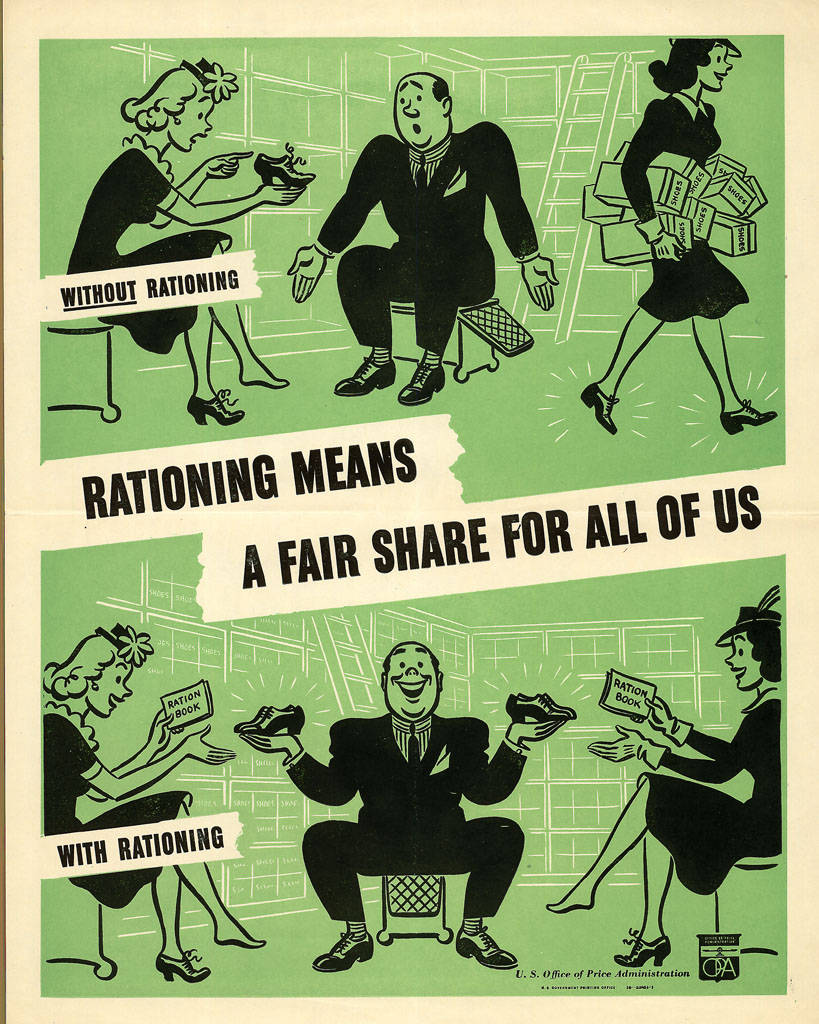
My new multi-touch iBook – “Workers Win the War: Toil and Sacrifice on the US Homefront” – embodies that approach. Here’s how.

Tags: , , , , , , , , , , , , , , ,

Why Do Teachers Ask Questions They Know the Answers To?

» 06 February 2013 » In Ed Tech, Strategies, Students, Teachers » 2 Comments

The-Future-featured

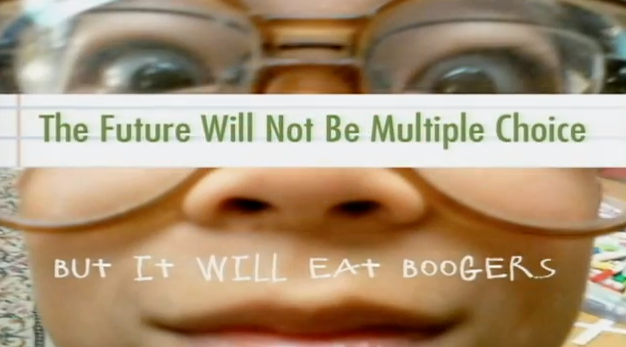
Here’s a TEDx video – The Future Will Not Be Multiple Choice – that showcases the power of a PBL / design-based approach to learning. While you watch it, try to think of a meaningful career that looks like filling out a worksheet.

Tags: , , , , , , , , , , , , , ,

Common Core Skills: Deeper Reading and Critical Thinking

» 31 July 2012 » In Ed Policy, History / DBQ's, Literacy, Strategies, Teachers » No Comments

First automobile-featured

Across the county teachers are looking for lessons and resources to implement new Common Core standards. While some see Common Core skills as something new, most of these skills are exemplified in the well established, document-based approach to instruction. As a long-time advocate of DBQ’s, I’ve re-posted sample lessons (elementary, middle and high school) that demonstrate how to build student skills in literacy and critical thinking, while supporting mastery of the Common Core.

Tags: , , , , , , , , , ,

14 Provocative Questions for the Faculty

» 25 July 2012 » In Commentary, Ed Policy, Leadership, Reflection, Teachers » 3 Comments

nostopping-featured

It’s back to school time. Get ready for that opening day faculty meeting where you sit and listen, while wishing you could be getting some actual work done in your classroom. Here’s few disruptive questions you could pose to subvert the status quo in your school. Let’s begin with who’s learning, who’s not, and what are we doing about it?

Tags: , , , , , ,

How to Motivate Students: Researched-Based Strategies

» 22 May 2012 » In How To, Reflection, Strategies, Students » No Comments

motivate-featured

A new CEP report, “Student Motivation—An Overlooked Piece of School Reform” pulls together findings about student motivation from decades of major research. Four key elements of motivation are detailed – Competence, Control/autonomy, Interest/value, and Relatedness. Links to report, findings and suggestions that teachers, schools and parents can use to motivate students.

Tags: , , , , , , , , , ,

Big Ideas and the Relevant Classroom

» 14 August 2011 » In Commentary, History / DBQ's, Students » No Comments

idea-small

When it came to time to study the debate over the ratification of the constitution, my students didn’t have to ask the question – “why do we need to study this?” They realized that they were looking at “Round 1″ of an ongoing debate over how strong the central government should be.

Tags: , , , , , , , ,

edcampPDX – Educators’ Unconference – Portland, Oregon

» 03 August 2011 » In Events, PD » No Comments

edcamp-logo

Calling all educators from the Pacific NW. Join us in Portland on Aug 18th, for edcampPDX – free, democratic, participant-driven professional development. It’s an unconference built on collaboration and dialogue, not keynotes. More information and edcamp video.

Tags: , , , ,

Teachers, Have the Courage to be Less Helpful

» 19 July 2011 » In Commentary, Strategies, Teachers » 14 Comments

how-question-preview

Most of our students get a steady diet of force-fed information and test taking strategies. We’re giving a generation of kids practice for predictable, routine procedures. Here’s thoughts on how you can begin to “be less helpful” and give students practice in “figuring it out” for themselves. That’s where the real learning will take place.

Tags: , , , , , , , ,

Solve This Problem, You’ll Learn the Skills Along the Way

» 12 June 2011 » In Strategies, Students » No Comments

wisc-stem-featured

Students explore their world with an expectation of choice and control that redefines traditional notions of learning and literacy. Educators are discovering that they can motivate students with a PBL approach that engages their students with the opportunity to behave like STEM professionals while solving real-world problems. I’m in the Wisconsin Dells to deliver a four-hour training session for CESA 6. It’s entitled “21st Century Skills in Action: Project Based Learning in the STEM Classroom.” We’ll be using a Turning Point ARS and lots of activities so that participants experience the why, what, and how of PBL in the STEM curriculum.

Tags: , , , , , , , , ,