Peter Pappas »
12 February 2012 »
In Commentary, How To, Publishing, Social Web »

Content is everything
This morning I responded to a question on one of my LinkedIn groups. "If you could use only one method to market yourself online, what would do?" After being asked to elaborate on my initial comment, I decided to turn it into a blog post and a demonstration (of sorts). Note: While the question addressed promoting "yourself," my focus is on promoting your ideas.
Promotion begins with freely sharing quality content. I use the Creative Commons BY-NC 3.0 license. Use it, share it, remix it. Just tell people where you got it, and don't try and sell it. I've never been hesitant to "give my stuff away." Remember, as the price of commodity drops, consumption increases. Who wants to go back to a site that hides all its content behind a paywall.
Freely sharing your material amplifies and "promotes" it in new ways. One of my most popular posts - Taxonomy of Reflection - has been modified for diverse purposes - from 2nd graders, to the SEC XBRL filing process. I would never have generated all those uses. I don't even know what the second one is.
Remember, as the price of commodity drops, consumption increases
Each time I publish a new post, I use bit.ly to create a shortened URL along with a tweet pointing back to the new content. (I also send it to Facebook, Linkedin, and Google+). I then add the new post title and shortened URL to an existing text file - a running list of "bit.ly-ized" links to all my posts. I keep that text file on Dropbox, accessible from any of my computers and my iPhone. Your list of "bit.ly-ized" links is a great resource to add to your #edchats, conference backchannel tweets and emails.
I do much of my reading online, focusing on the space where digital literacy, social media, technology and education intersect. If sites offer the option, I've registered and created a reader profile - usually with an icon image, info about me and a link back to my blog. If I run across an interesting piece that relates to one of my existing blog posts, I'll take a moment to leave a comment. I can easily use my text file of shortened URLs to include a link back to one (or more) of my relevant posts. If I happen to be one of the early commenters, I usually will detect a ripple of traffic in from that comment. My analytics show that often, these new visitors will continue on into my site to view a few more of my posts. Please note: I'm not suggesting you use comments as spam to paste a link back to your post. I'm talking about extending the conversation in a meaningful way, and including a link back to you, only if you have a post that's germane. (I get loads of inarticulate, off-subject "comments" on my blog from sites like FreeTermPapersOnline.com. Does someone really think I'll approve them?)
To help me find relevant content, I use RSS and auto notifications from a number of sites that steer me towards new material that I might enjoy and comment on. When I've written a particularly timely blog post, I sometimes will search on that news item and leave comments on other sites linking back to my post. For example, when the latest PISA test results were released, I placed comments with links back to my post Stop Worrying About Shanghai, What PISA Test Really Tells Us About American Students It was a unique take on the test results that sidestepped the typical "American education Sputnik moment" and drew lots of traffic. Plus the links in didn't hurt my Google rating on "PISA test" searches.
So answer to the original question – if you could use only one method to market yourself (and your ideas) online – it begins and ends with freely sharing quality content. (And being able to easily access and add to your comments.)
Final note: When I'm done with this post, I'll illustrate my method by adding a new comment to the Linkedin discussion with a link back.
Hat tip to Chris Wechner for his discussion group question.
Tags: Backchannel, Bit.ly, Blogging, Creative Commons, Google, LinkedIn, PISA, Twitter
Peter Pappas »
03 November 2011 »
In Guest post, History / DBQ's, How To, Reflection, Students »
My approach to instruction borrows from the thinking of Donald Finkel who believed that teaching should be thought of as “providing experience, provoking reflection.” Here’s a great “how-to” for teachers who want to engage their students in blogging about themselves as learners. It models how to move students from simply explaining what they did in an assignment, to more deeply reflecting on their progress. Includes student writing prompts and examples of student reflections. Also links to my Taxonomy of Reflection and more teacher resources on blogging and reflection.
Tags: Blogging, Critical thinking, Engagement, Friends, Google, Higher-order thinking, Innovation, Mike Gwaltney, Motivation, OES, PDX, Writing
Peter Pappas »
23 October 2011 »
In Commentary, Ed Policy, Leadership, Literacy, Students »
Clive Thompson wonders “Why Johnny Can’t Search” (Wired Magazine Nov, 2011). I note that schools contribute to the problem in two ways. In an effort to protect students from offensive online content many schools respond by sequestering students behind an information firewall. That sets Johnny up to fail in our “wild west” of information. Every day he walks into a sanitized information landscape with the expectation that anything he finds behind the school firewall is acceptable.
Schools inhibit the development of critical evaluation skills in another way – the relentless (test prep) focus on mastery of facts. Johnny can assess the validity of information because he’s awash in a sea of text without context. Critically evaluating sources requires a deeper understanding of author and purpose. That’s developed with an inquiry-based approach to learning. No time for that – we have to “cover” content for the test. In the relentless march to the exam, Johnny gets well acclimated to quickly stuffing his head with facts. No wonder he’s willing to take up Google on the bet that “I’m Feeling Lucky.”
Tags: Blogging, Clive Thompson, Common Core, Critical thinking, Google, Higher-order thinking, Information landscape, Reform, Test prep, Visual Literacy, Wired
Peter Pappas »
06 July 2011 »
In Commentary »
Thinking of migrating from TypePad to WordPress? When I first started blogging back in ’05 I was a bit confused by WordPress, so I opted for TypePad. TypePad has been easy to use, but I’ve enviously watched WordPress evolve into a far superior platform. Here’s how Foliovision smoothly managed my recent move.
Tags: Blogging, Creativity, Data, Pat Martin, PDX, WordPress
Peter Pappas »
29 March 2011 »
In Events, How To, Social Web, Visualizations »
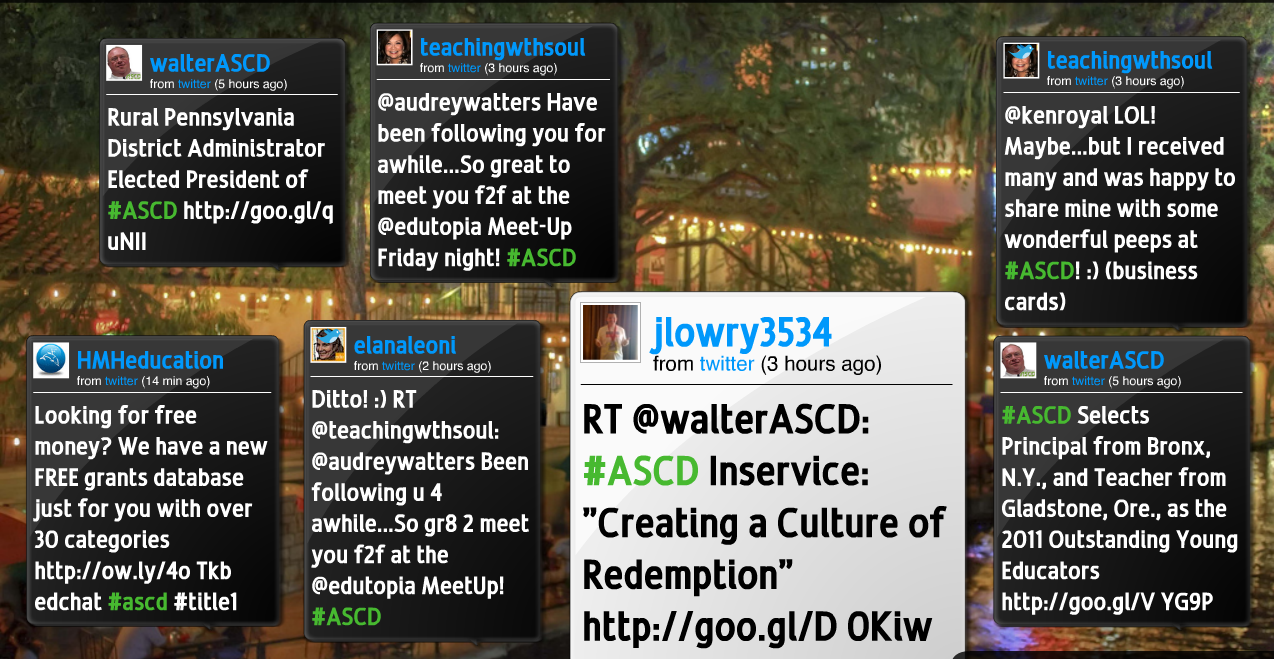
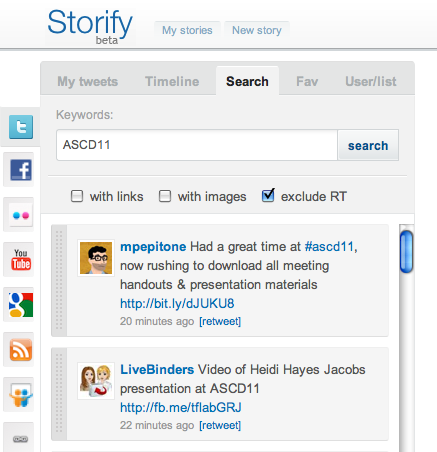
One of the goals of my blog is to research, curate and effectively share information with my audience. Conferences are a great aggregator of expertise and information that have inspired some of my most popular blog posts. Here’s how to gather the conference backchannel using Wiffiti, Twitter StreamGraphs, Prezi, and Storify. A “how to” with sample visualizations.
Tags: Apps, Backchannel, Blogging, Google, Organizers, PDX, Prezi, Storify, StreamGraphs, Twitter, Wiffiti
Peter Pappas »
30 January 2011 »
In Events »
I'm pleased to be invited as a guest blogger to the Instructional Technology Strategies Conference 2/20-22 in Portland, Oregon. More on the conference. ITSC 2011 (twitter/ITSCPDX) is hands-on conference with a clear focus on the practical use of technology in the classroom – workshops are small sessions led by facilitators, not presenters. The facilitator roster includes [...]
Tags: Blogging, ITSC11, Music, PDX, Prezi, Twitter
Peter Pappas »
22 November 2010 »
In Commentary, Ed Policy, Leadership, Reflection »
Schools will need to become places that create engaging and relevant learning experiences, provoke student reflection, and help students apply the learning to life. Here’s nine reflective questions for school leaders to consider. They’re organized around three themes and a concluding recommendation.
Tags: ARS, Blogging, Bloom, Common Core, Creativity, Critical thinking, Defining, Engagement, Evaluation, Higher-order thinking, Music, Reform
Peter Pappas »
07 April 2007 »
In Commentary »
Each morning I spend a few moments with my spam before I hit delete. I’ve long admired the pointless subject lines – now with a quick copy / paste – I assemble a “poem.” I pick the morning’s most outlandish spam “author” and give them credit for the post. Here’s a few of “my creations.”
Tags: Amusements, Blogging, Haiku, Information landscape, Spam, Tumblr
Peter Pappas »
05 March 2007 »
In Commentary »
Blogs compensate for my lack of originality. They allow me to easily synthesize content from different sources and present it in a new context. As W. Somserset Maugham said, “…Quotation…is a serviceable substitute for wit.” (See, I borrowed again. ) That why I call my blog Copy / Paste. – and here’s 4 more reasons why I blog.
Tags: ARS, Blogging, Jazz, Music, Pat Martin, PDX, Rochester, Writing
Recent Comments