Peter Pappas »
22 April 2013 »
In History / DBQ's, How To, Literacy, PD, Strategies, Students »
I'm planning for an upcoming full-day workshop for Chicago-area middle school teachers entitled "Think Like a Historian: Literacy and the Common Core." The Common Core encourages students to more closely read a text (in all it's multimedia formats) by answering three critical questions
- What did it say?
- How did it say it?
- What's it mean to me?
If you were apply those questions to my workshop you might answer them like this:
- What did the workshop say? For all it's controversies, the Common Core provides a basic road map for helping your students to "think like a historian" and enhance their literacy and critical thinking skills.
- How did the workshop say it? Don't lecture at people. Model the strategies and let teachers experience them in a classroom-like setting.
- What's it mean to me? What are the workshop's strategies and perspectives that I could feasibly incorporate into my classroom to support Common Core skills?

Now that I've "flipped" the workshop, here's a brief lesson in using Common Core questioning. I'm currently visiting Turkey and I thought I'd model a Common Core close reading of my visit to an Istanbul museum exhibit. I'll dig a little deeper into the three questions with a few more prompts and provide brief answers as if I were a high school student reflecting on their experience.
First the setting: I visited the "Anatolian Weights and Measures" exhibit at the Pera Museum in Istanbul. It's one large room with exhibit cases around it's perimeter. A very manageable number of artifacts, labeled in both Turkish and English. I spent about an hour there. So here goes - Common Core close reading prompts, followed by "student responses." Left: Roman steelyard weight - Hercules
1. What did the text (artifacts / exhibit) say? Summarize the key ideas and provide supporting details.
A: The museum exhibit is a roomful of measurement tools - weight, volume, distance. When I first walked in I turned right and looked at some tools from the 1900s. As I continued around the wall I realized that I was going back in time. Sort of an interesting way to look at the artifacts.
As I progressed "back in time" to the Egyptians era, I realized how important measurement was to civilization. I realized that if you were going to trade things, you needed to measure them. The same was true for owning land. You needed to have a way to measure it. Plus people need to have some way to agree on the "official" measurements. That means the ancients needed some sort of government or rules for trade. You can see that many of the weights had "official" seals on them.The exhibit showed that the ancient Babylonians, Egyptians, Greeks created standardized systems for measurement.
Common Core close reading prompts, followed by "student responses."
2. How did the text (artifacts / exhibit) say it? How is it organized? Who created it and what were their goals? What patterns do you see?
A: I'll answer this one from two perspectives - first the creators of the original artifacts and then the curators who designed the exhibit.
The weights were all designed to serve a function, but they were often very artistic as well. At first I wondered if that was because craftsmen wanted to personalize their work. Then I thought the artisans might have decorated the weights to make them harder to counterfeit. Ancients would want to be sure that weights were accurate and that some trader wasn't ripping them off with a phony measurement. I think the weights were also designed to look official to give people confidence in the measurements they were getting.
The curators of the exhibit used a chronological approach to present the artifacts. But they also grouped items together by themes to help you make connections across time. For example there was a section featured mobile scales from different eras. They were designed for traders that needed scales that they could easily bring with them. That got me thinking of the long history of trade routes tranporting goods from far off lands.
18th C Money Changer's Balance
3. How does it (artifacts / exhibit) mean to me? How does it connect to my life and views?
A - The exhibit is called "Anatolian Weights and Measures" and it makes it very clear that every artifact was found in that region. I think one of the goals of the curators was to prove that Turkey has had a long history of civilization and trade. The exhibit showcases thousands of years of measurement tools that reinforce the idea of Turkey as as the crossroad of different cultures. That echoes the image of modern Turkey as a gateway between Europe, Asia, and the Middle East. The exhibit also makes me realize that the idea of a global economy is actually not a new thing. People have been trading across vast distances for thousands of years.
In one way, in the exhibit reminded me of how some things never change. It seemed like there was little difference in the scales used in Egypt or the portable balance of 18th century money changer. The basic physics stayed the same. The Roman steelyard balance works using the same principals as a locker room scale with sliding weights.
But in another way, the exhibit reminded me how much the new technologies have changed things. The exhibit included a set of linked folding metal measuring rods that today are easily replaced by a small laser distance finder. They would could both measure distance, but the technology, accuracy and portability of the tools are dramatically different.
Image credit/ Pera Museum Pinterest
Tags: Anatolian, Artist, Close reading, Common Core, Comparing, Critical thinking, Flipped classroom, Higher-order thinking, Istanbul, Museums, Pera Museum, STEM, Summarizing
Peter Pappas »
13 March 2013 »
In Ed Tech, History / DBQ's, Visualizations »
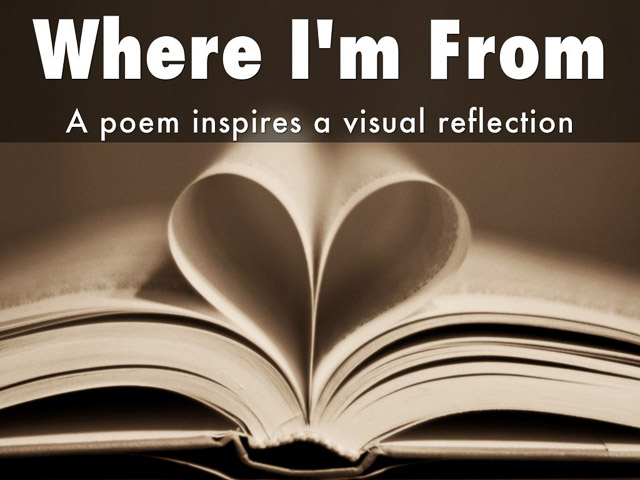
I’m prepping for an “iPad in the Classroom” workshop and I thought I’d try Haiku Deck – a free presentation app for the iPad. It’s an impressive and easy to use tool for creating a knock-out presentation on the iPad – a great way for teachers and students to quickly share their ideas with the classroom and the digital world beyond. Here’s a deck I created in a few minutes.
Tags: Apps, Artist, Creative Commons, Haiku Deck, Information landscape, iPad, US History, Visual Literacy
Peter Pappas »
11 December 2012 »
In Commentary, Ed Tech, Reflection, Teachers »
I had a great time recording a podcast with Mark Hofer and David Carpenter for their series Ed Tech Co-Op.
Mark led off by asking me to reflect back on my some of the driving themes in my career. I confessed that as a novice teacher, I mimicked my experience as a high school student and taught primarily via lecture mixed with an occasional “guess what the teacher is thinking” whole-group discussion.
But I recalled an “aha” moment after repeated visits to the art class in the classroom next door. I realized that if the art teacher taught art, the way I taught history, his students would be sitting there watching him paint.
Tags: Artist, Bloom, David Carpenter, Ed Tech Co-Op, Higher-order thinking, Information landscape, Mark Hofer, Podcast, Summarizing, US History
Peter Pappas »
12 March 2012 »
In Ed Tech, Events, Social Web, Teachers, Visualizations »
The folks behind TED talks have just launched TED-Ed to serve the mission “of capturing and amplifying the voice of the world’s greatest teachers.” TED-ED has put out a call to teachers everywhere to submit lesson ideas for inclusion in the new YouTube Channel – TED-Ed: Lessons worth sharing. Right now there’s a gifted educator delivered a great lesson to their class. TED-Ed is looking for your help to find that educator, team them with animators, and amplify that lesson for all to see. Nominate an educator | Share a lesson | Nominate an animator.
Tags: Artist, Creativity, David Gonzales, Innovation, Motivation, Relevance, Sir Ken Robinson, Sunni Brown, TED Talks, TED-Ed, Terin Izil
Peter Pappas »
13 January 2012 »
In Strategies, Students, Visualizations »
Games are interaction with rules. They mimic the scientific method – hypothesis tested to overcome obstacles and achieve goal while operating inside prescribed system of boundaries. Video games provide failure based learning – brief, surmountable, exciting. While failure in school is depressing, in a game it’s aspirational.
Josh Millard recently began curating a growing collection of video game maps drawn from memory at his site Mapstalgia. Submissions range from detailed rendering to sketches on the back of a napkin. But they all demonstrate a great way to teach mental mapping skills – spatial relationships, sequence, causation, scale, location, and measurement.Use Mapstalgia as an example for your students. Then give them a chance to have fun while demonstrating their ability to translate gaming worlds into two dimensional representations. Let them compare maps of the same game to design their own mapping rubric. Explore different representations of game elements for clarity and design.
Tags: Amusements, Artist, Comparing, Creativity, Engagement, Evaluation, Games, Higher-order thinking, Information landscape, Josh Millard, Legend of Zelda, Maps, Mapstalgia, Motivation, Relevance, Sequencing, Sonic Adventure 2, Summarizing, Super Mario, Visual Literacy, Zork
Peter Pappas »
12 January 2012 »
In Commentary, Visualizations »
It’s unfortunate that student don’t get to use their innate perceptual skills more often in the classroom. Instead of discovering patterns on their own, students are “taught” to memorize patterns developed by someone else. Rather than do the messy work of having to figure out what’s going on, students are saddled with graphic organizers which take all the thinking out of the exercise. This clever video, “Doodling in Math Class: Spirals, Fibonacci, and Being a Plant” captures the fascination of patterns in nature.
Tags: Amusements, Artist, Comparing, Creativity, Design, Math, Science, Vi Hart
Peter Pappas »
18 December 2011 »
In Ed Tech, Events, Guest post, How To, Students, Visualizations »
We devised an experiential project, “Complex City” in order to help students think critically about their communities. To help students to become more aware of their surroundings, in order to foster an educated, ethical, and empathetic community. To facilitate opportunities that help students translate experiences, investigations, and ideas into artistic renderings that effectively communicate new knowledge.
In asking them to map an area of San Diego that had significance to them, we wanted them to step back from the familiar aspects of their community and city, and translate those aspects into a visual map. As part of this project, students researched, interviewed, and investigated their city and community in myriad ways. By compiling their work and making collective and idiosyncratic maps of San Diego, they have been challenged to rethink what they understood to be the reality of the built environment around them, as well as to accept the new knowledges that their classmates contribute. They have become more invested in their own community because their new knowledge implicates them as involved citizens. These maps collect particular versions of this place (versions not always visible to others, or in traditional maps) as we see it in the fall/winter of 2011.
Tags: Artist, Complex City, Creativity, Critical thinking, Engagement, Essential questions, High Tech High, Infographic, Innovation, Maps, Margaret Noble, Math, PBL, Rachel Nichols, Rebecca Solnit, San Diego, Social change, STEM
Peter Pappas »
29 November 2011 »
In Ed Tech, Events, Guest post, How To, Students »
Is our goal to have students performing better on standardized tests or to be prepared for what they are going to encounter in college and life? The ideal would be that they would be prepared for both. So the questions become, what do we want to leave the students with? How are we going to prepare them for the real world? What do we want them to learn about themselves? And how do we do it? To clear the air, I don’t believe that students are taking my calculus class because they need help doubling a recipe or balancing their checkbook. I believe it is because we want to expose students to the poetry of numbers, to have a new outlook on how to solve problems, to be able to think outside of the box, and to see how the unbreakable human spirit has conquered problems that once mystified the greatest of thinkers. Like any great symphony, mathematics represents a pinnacle of human creativity. We teach math to enrich the lives of our students in a way akin to reading poetry or composing music. This is the story of a student-created exhibit showcasing the beauty, humanity and intrigue behind math in history, philosophy and the applied arts.
Tags: Artist, Close reading, Creativity, Critical thinking, David Stahnke, Engagement, Essential questions, High Tech High, Higher-order thinking, IEF, Innovation, Margaret Noble, Math, Microsoft, Motivation, Music, PBL, Relevance, Rigor, Science, STEM
Peter Pappas »
29 April 2011 »
In Commentary, Ed Tech, Publishing »
I just went to the iTunes App Store, and in one impulsive click, downloaded Al Gore’s companion app to his book “Our Choice: A Plan to Solve the Climate Crisis.” It’s an immersive learning environment that begs the question – $4.99 iPad app or $49 textbook? Watch this video and you decide.
Tags: 24PageBooks, Apps, Artist, Data, Hardware, Innovation, iPad, Push Top Press
Peter Pappas »
02 March 2011 »
In Commentary, Ed Policy »
What an uncanny prediction – digitized information being force-fed into bored students. Looks like one of those miracle test prep programs guaranteed to bring up the scores. But I’m not sure – is that Bill Gates or an overpaid teacher unwilling to give away his collective bargaining rights? Part of series of images (circa 1910) attributed to French artist Villemard in which he predicted Paris life in 2000.
Tags: Amusements, Artist, Google, Test prep
Recent Comments