Sadly, the world lost David Foster Wallace, in 2008. Fortunately, his writings live on. Recently his thoughtful 2005 Kenyon College commencement address was given new life in "This is Water" a video by The Glossary.
Wallace concludes: It is about the real value of a real education, which has almost nothing to do with knowledge, and everything to do with simple awareness; awareness of what is so real and essential, so hidden in plain sight all around us, all the time, that we have to keep reminding ourselves over and over. This is water.
Read his full address here. Listen to his full address here.
I had a great time recording a podcast with Mark Hofer and David Carpenter for their series Ed Tech Co-Op.
Mark led off by asking me to reflect back on my some of the driving themes in my career. I confessed that as a novice teacher, I mimicked my experience as a high school student and taught primarily via lecture mixed with an occasional “guess what the teacher is thinking” whole-group discussion.
But I recalled an “aha” moment after repeated visits to the art class in the classroom next door. I realized that if the art teacher taught art, the way I taught history, his students would be sitting there watching him paint.
A step-by-step guide to student writing that demonstrates the power of student choice, authentic audience and self-reflection. Sixth graders are motivated by writing “Traveling Through the Human Body with ABCs” for a third grade audience. The project demonstrates how to help students master content and develop project management and teamwork skills. The power of publishing enables students to think like writers, to apply their learning strategies and to organize and express their learning. It exemplifies the best of the information revolution – students as creators of content rather than as passive audience.
It’s back to school time. Get ready for that opening day faculty meeting where you sit and listen, while wishing you could be getting some actual work done in your classroom. Here’s few disruptive questions you could pose to subvert the status quo in your school. Let’s begin with who’s learning, who’s not, and what are we doing about it?
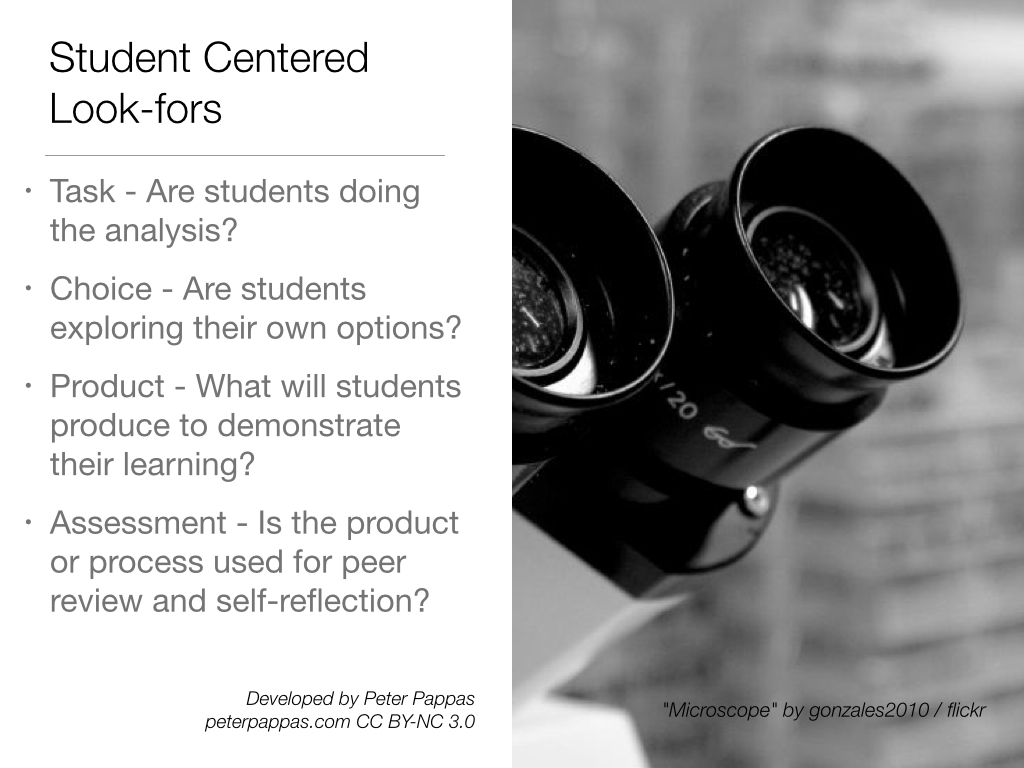
As a teacher you get to reinvent yourselves every year, but if you want to change schools everything is conspiring against you. Here’s some reflective questions that will help you subvert the status quo in your classroom. Let’s begin with, If a question has a correct answer, is it worth asking?
I recently was asked to keynote at the MicroSociety annual conference in Philadelphia. While my schedule prevented me from appearing in person, I thought it was a great opportunity to see if I could scale my small group webinar model into a conference keynote.
I used WebEx as my platform and attendees brought their own web-enabled devices to access to respond to my questions and prompts via LearningCatalytics.
Keynoters typically show up, explain their model, answer questions, etc. If all goes well, folks leave with an understanding of the ideas you pitched to them. Transfer of content is easy in the digital age, it’s processing the learning that’s the challenge. So I elected to flip my keynote. Why not use one of the strategies I recommend to teachers?
Here’s how I used my two hours – not to present, but to put them through a variety of experiences to provoke their reflections. (With more on how to flip your class.)
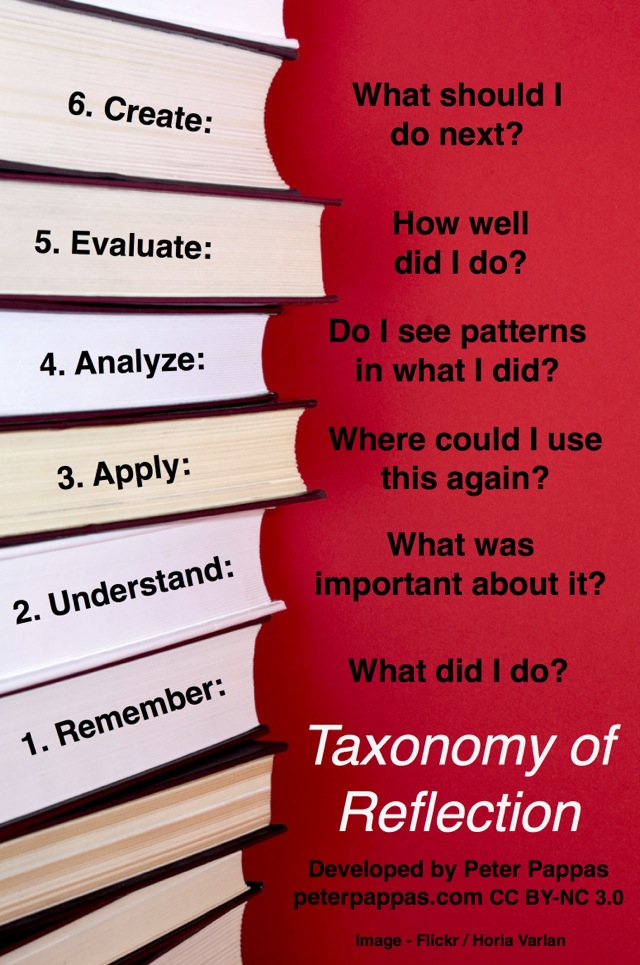
At the core of the creative process is the willingness to step back, reflect on what you’ve accomplished, ask how it’s going and then get back to working on it some more. So after a few weeks of using iBooks Author (IBA), I thought it was time to practice what I preach. I’ll use this post to explore my initial reaction to working with IBA framed with by thoughts on the reflective process. As I took a closer look at IBA, I realized that while it presented some interesting opportunities, IBA had some notable shortcomings. On the plus side, it’s very easy to create an engaging mix of text, images, recordings, and videos. Perfect for my first IBA project – a document-based history iBook.
A new CEP report, “Student Motivation—An Overlooked Piece of School Reform” pulls together findings about student motivation from decades of major research. Four key elements of motivation are detailed – Competence, Control/autonomy, Interest/value, and Relatedness. Links to report, findings and suggestions that teachers, schools and parents can use to motivate students.
Classrooms were a wonderful technological invention. They enabled learning to scale so that education was not only the domain of society’s elites. Classrooms made it (economically) possible to educate all citizens. And it is a model that worked quite well.
(Un)fortunately things change. Technological advancement, coupled with rapid growth of information, global connectedness, and new opportunities for people to self-organized without a mediating organization, reveals the fatal flaw of classrooms: slow-developing knowledge can be captured and rendered as curriculum, then be taught, and then be assessed. Things breakdown when knowledge growth is explosive. Rapidly developing knowledge and context requires equally adaptive knowledge institutions. Today’s educational institutions serve a context that no longer exists and its (the institution’s) legacy is restricting innovation.
I am proud of my life-long career in public education - especially the 25 years I spent as a teacher. For over 20 years, I have worked with school districts, state DOEs, leading educational organizations and companies to improve the quality of teaching and learning. I provide training and consulting services across the United States and internationally.
Free DBQ iBook: Close Reading Plus Essential Question
Critique and Evaluate PRIMARY SOURCES / Guiding CCSS PROMPTS
Analyze Propaganda: Think Critically About Persuasive Multi-Media Sources
Recent Comments